OddCameras.com
Lomo Daylight Developing Tank 35 mm
This
is a very handy accessory for your lab work. It lets you load 135
film without a dark room or a sleeve. If you follow the steps, you
don't need special skills to spool a film into a developing unit and
then develop it to your needs.
Some pictures:
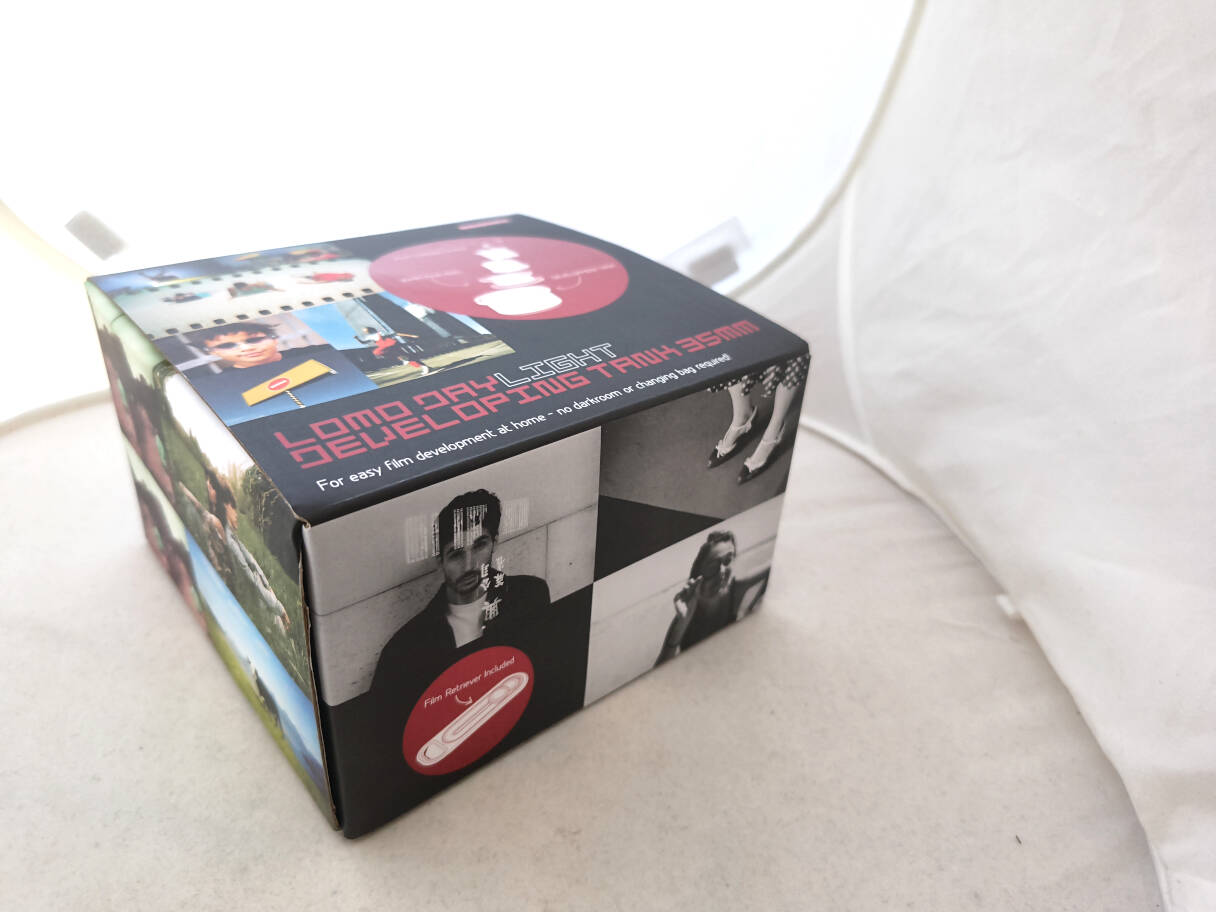
The box.
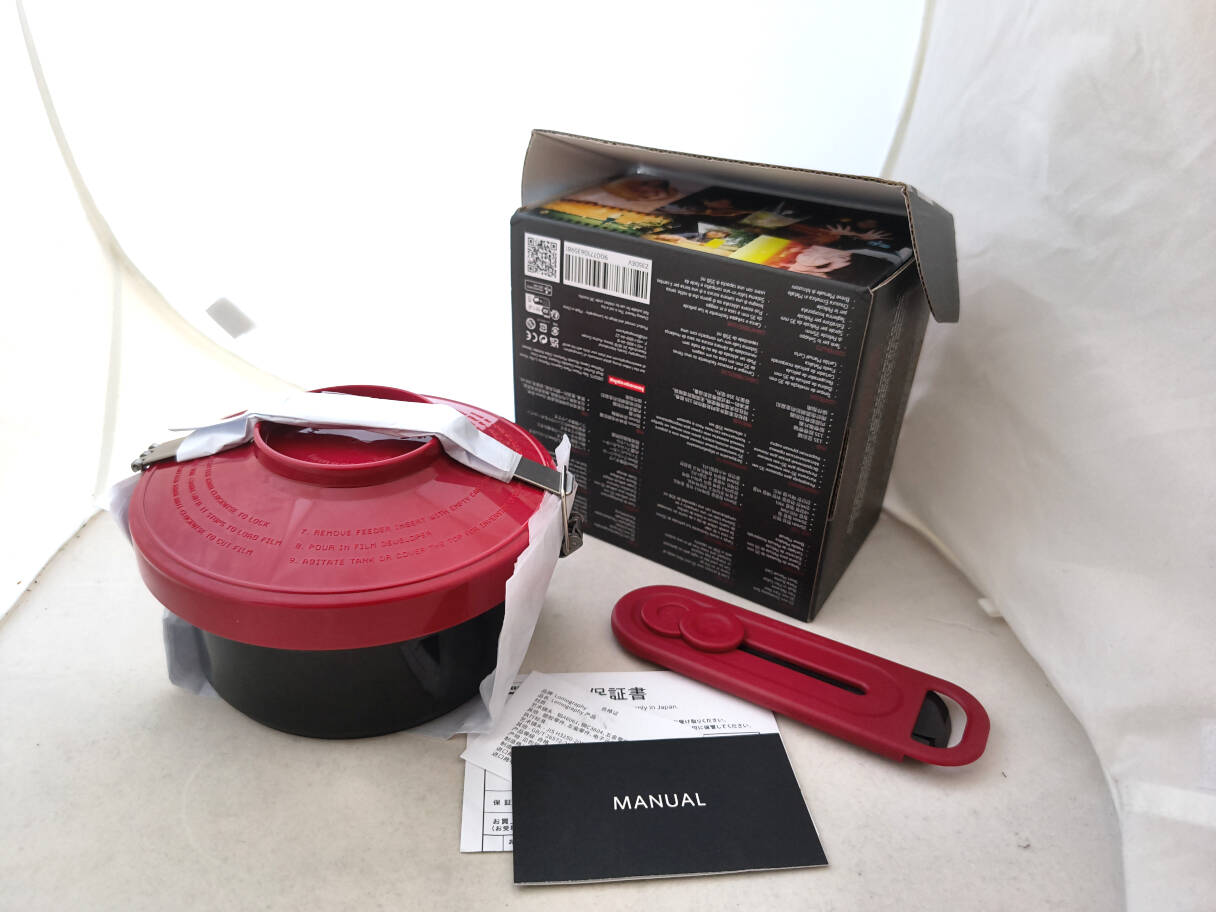
Whats in the box: the tank, a film retriever and some papers. The "manual" is only a code to download it from their website.
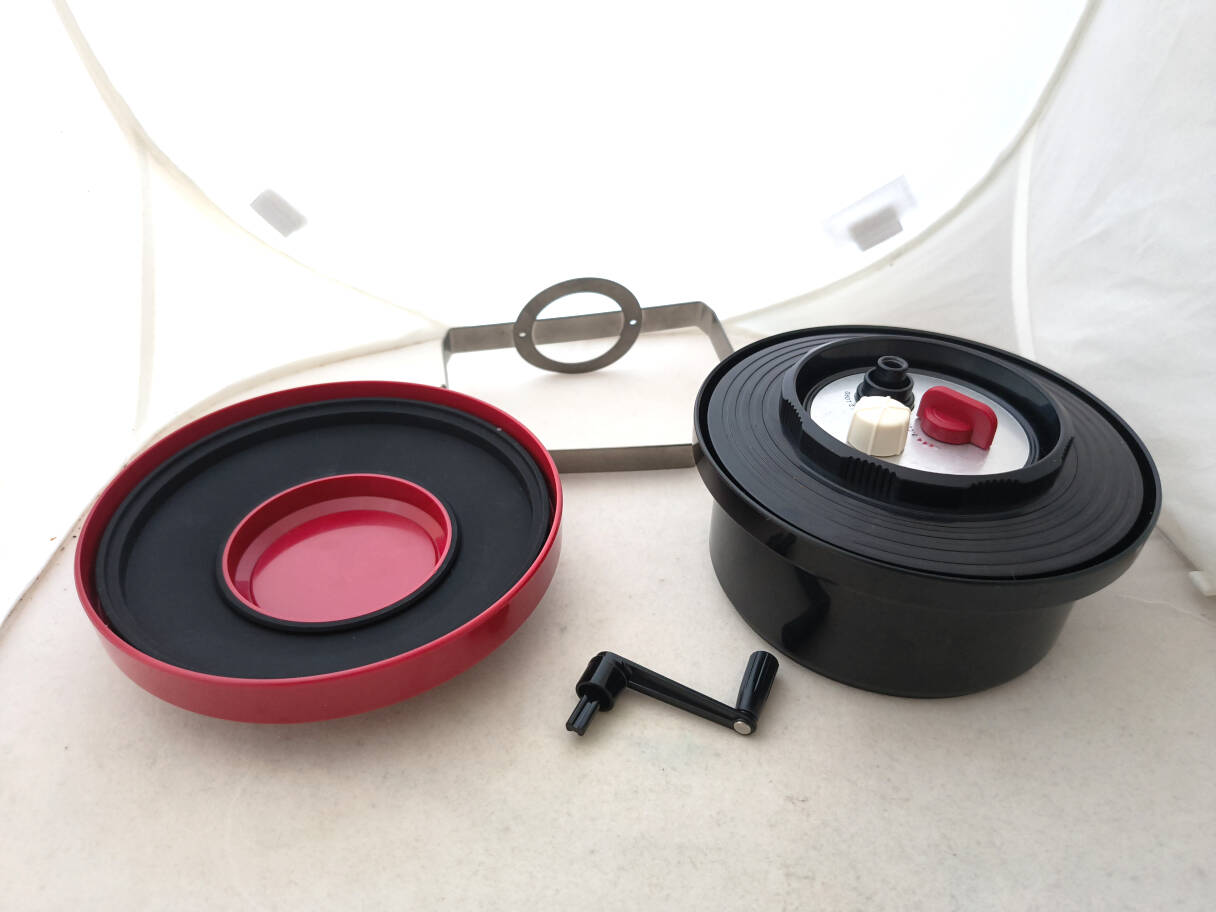
A tank, a solid lid, a handle and a device to keep the lid tighty on the tank if you do inversion development.
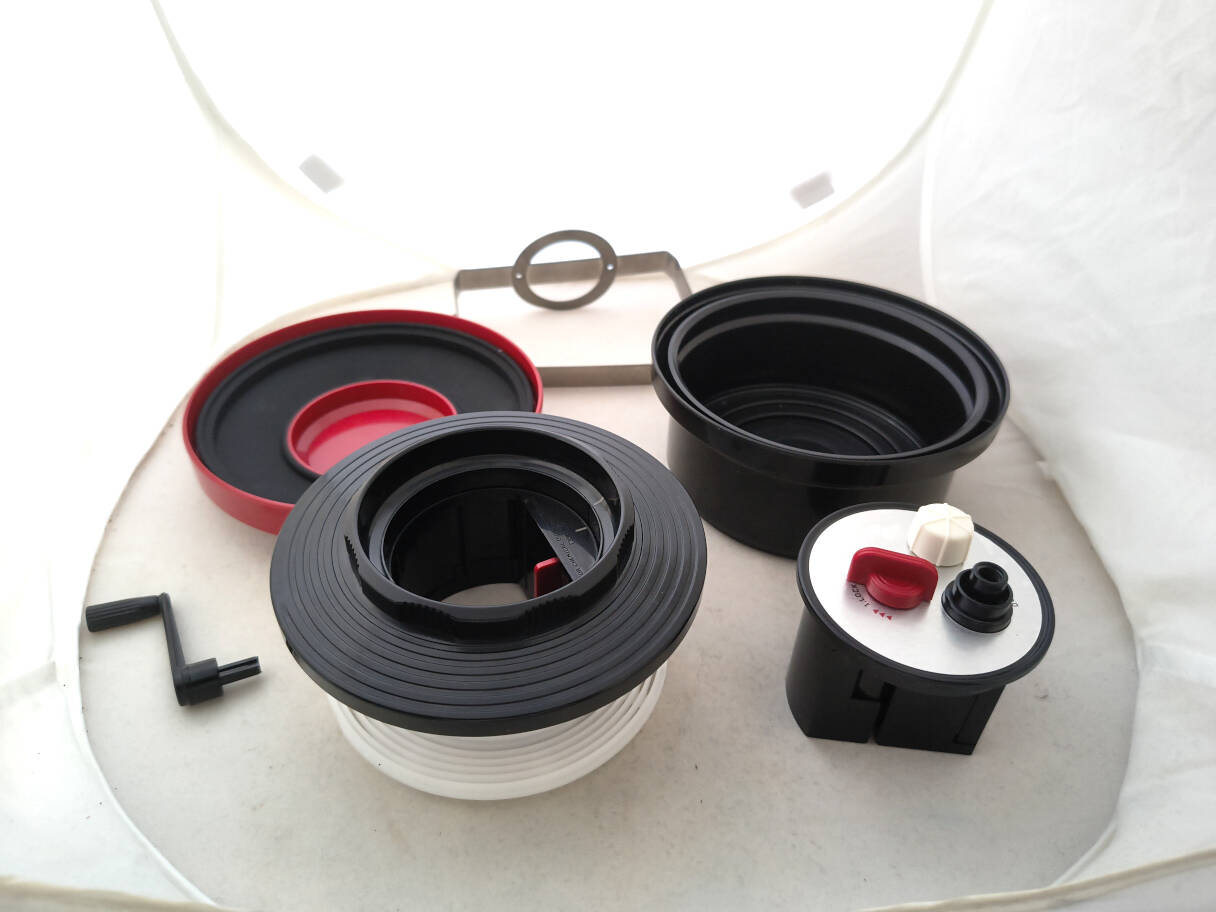
Further apart: spool and film unit taken out.
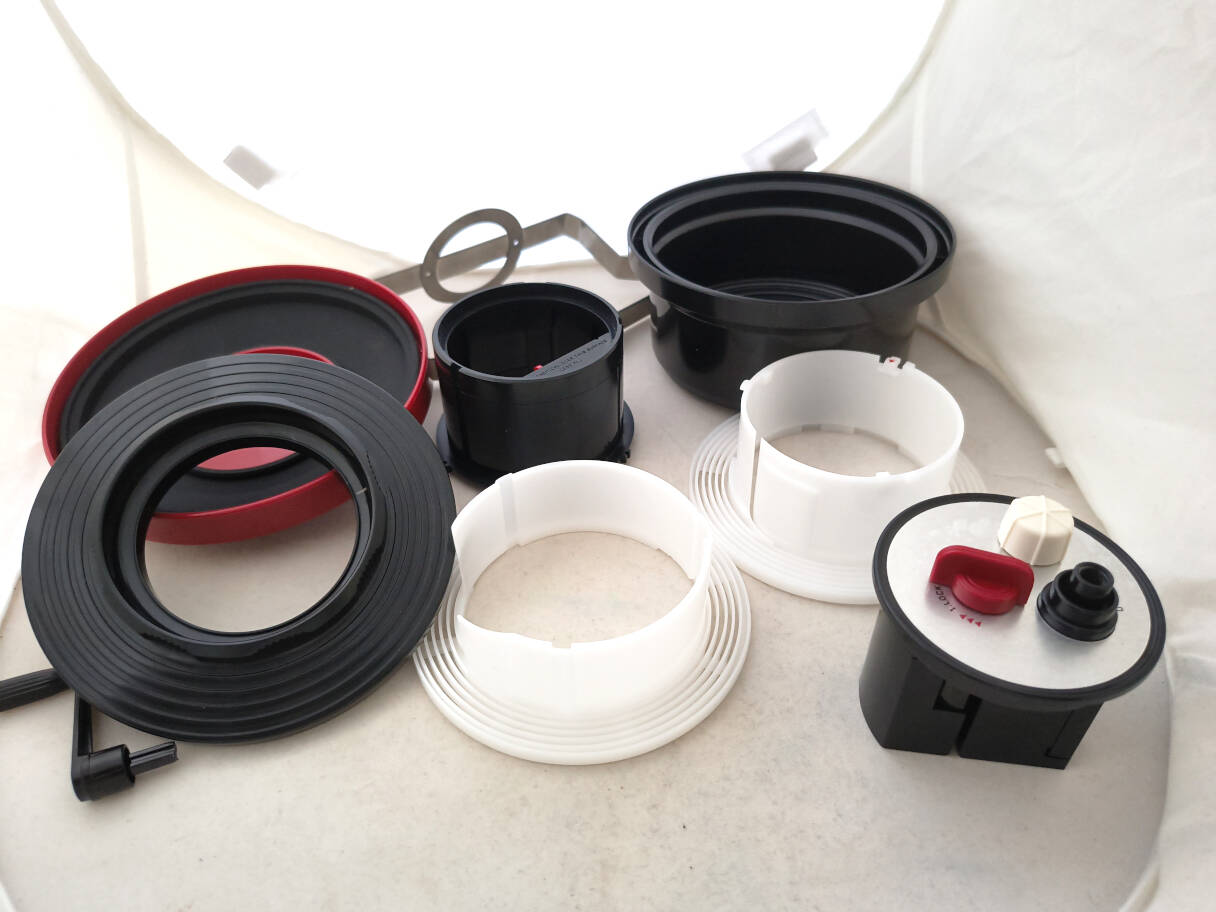
All disassembled: spool and core taken apart.
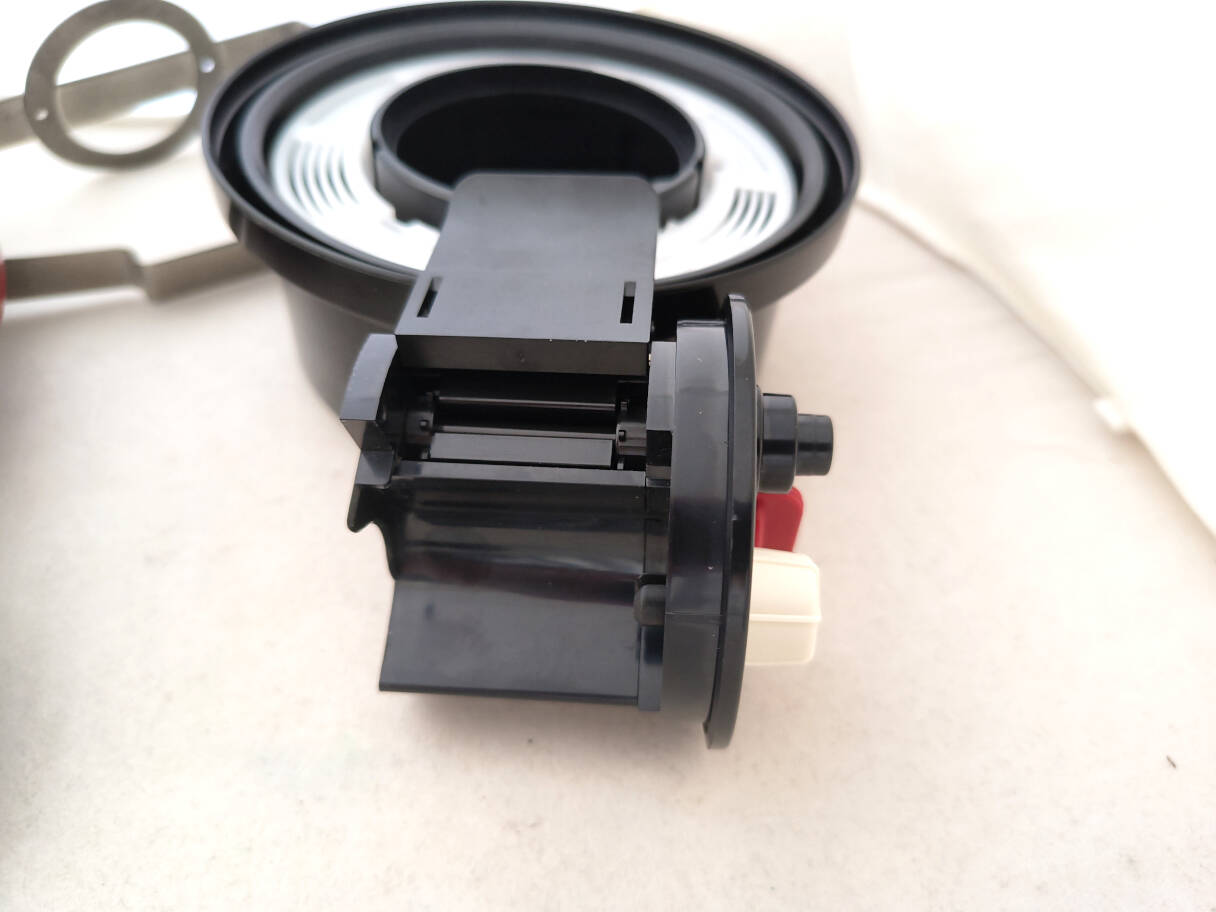
The film feeding unit.
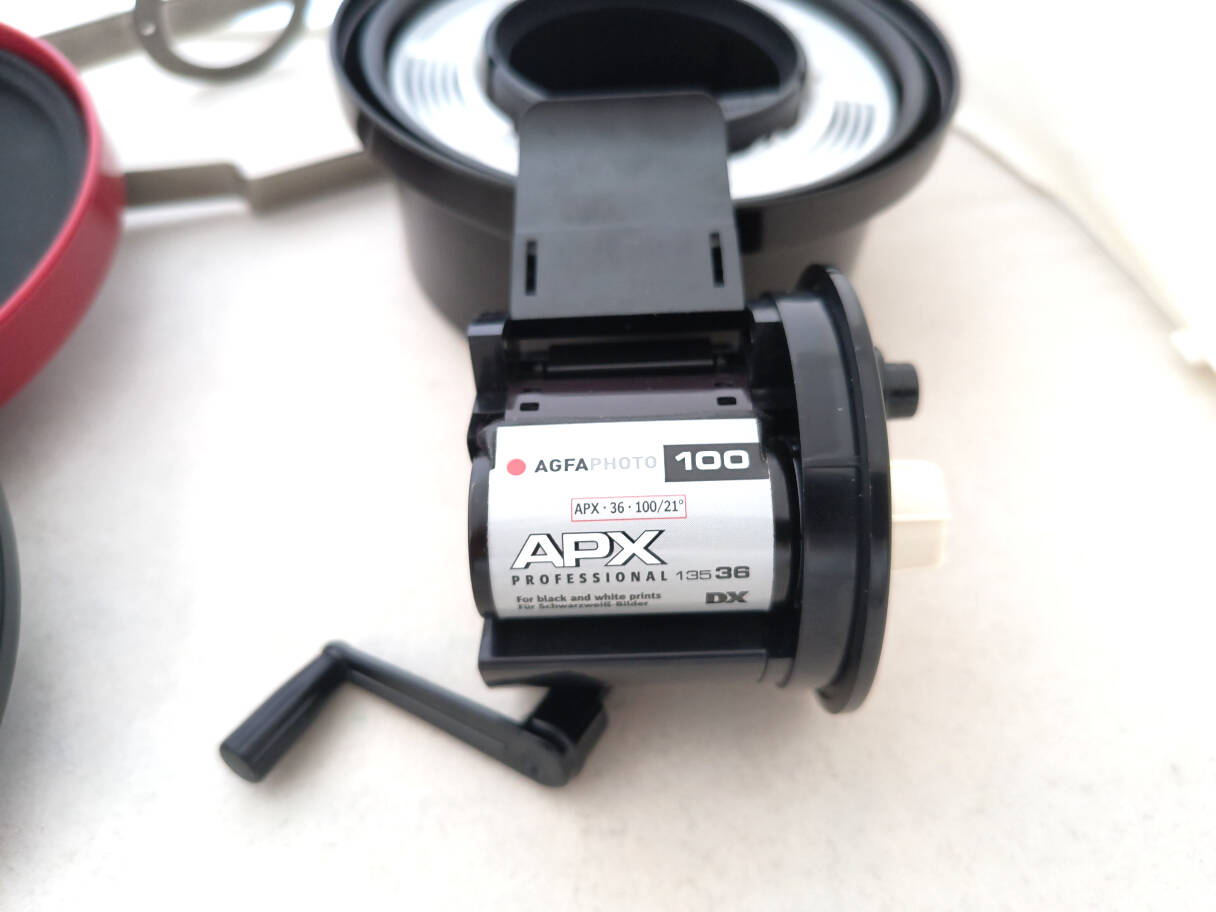
Film canister inserted.
To feed a film, retrieve the film leader with the film retriever. If
you follow the steps of the instructions, it's easy, it's a good
retriever model. Cut off the leader and clip the edges.
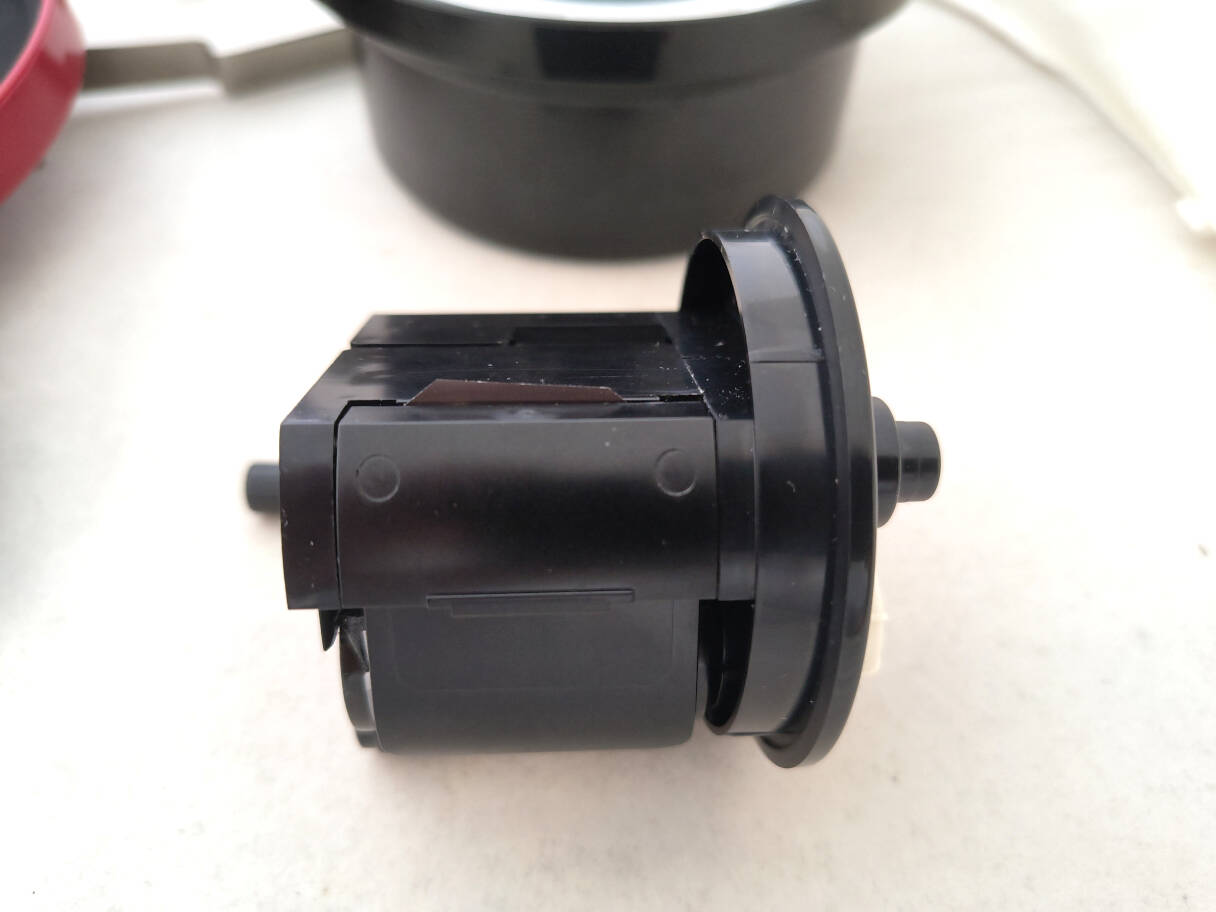
Close the unit. the film should just be visible. In the picture it's already too much, so retract 2 or 3mm.
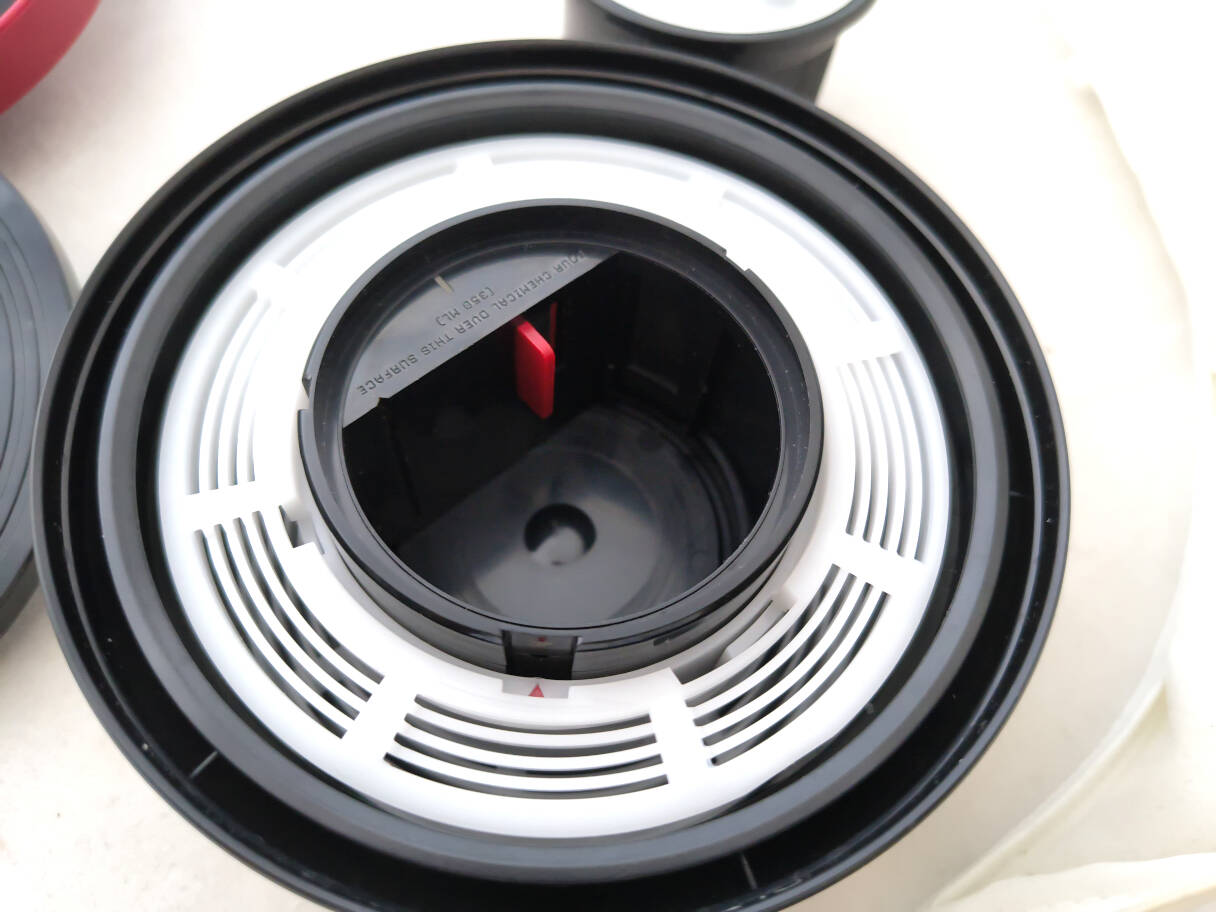
Check that the cutting unit is closed, otherwise you will not be able to insert the feeding unit.
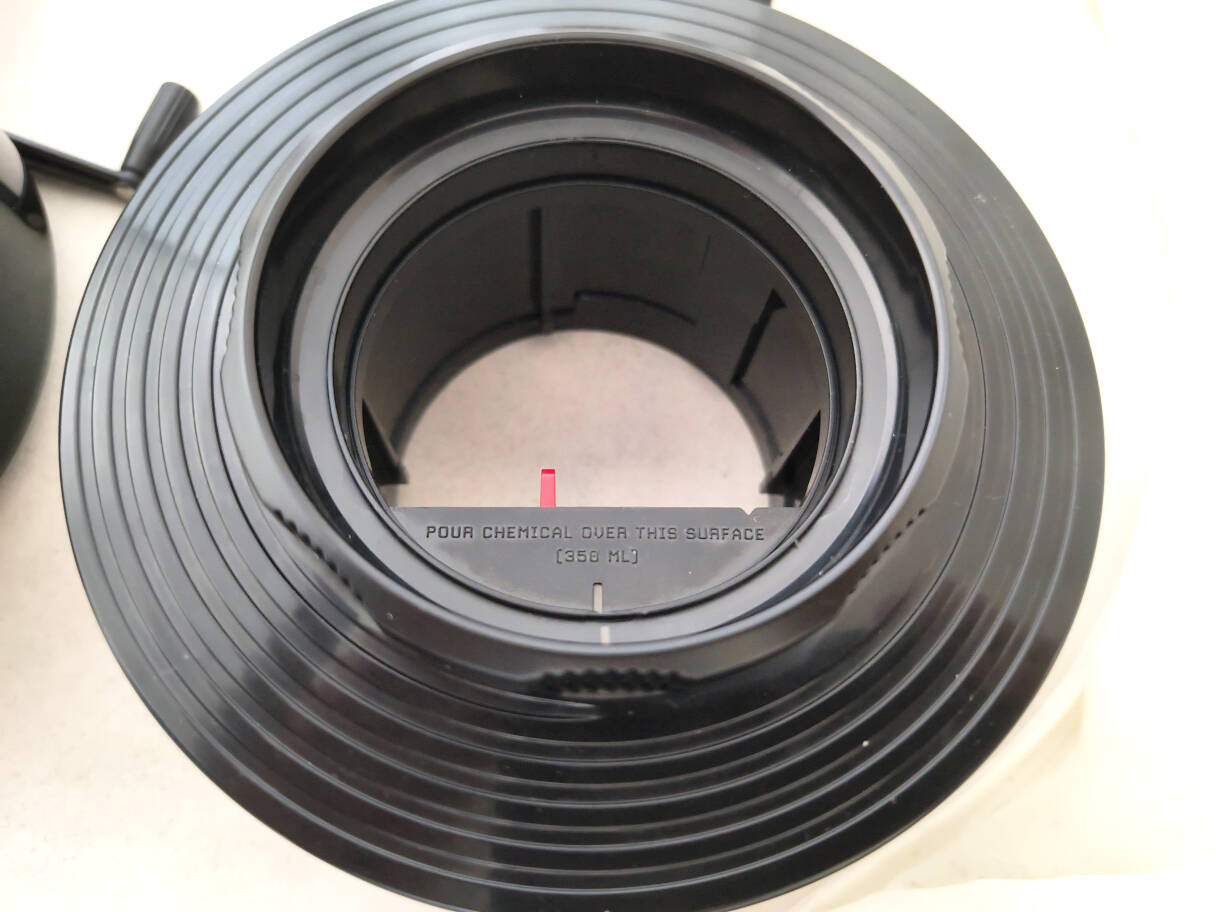
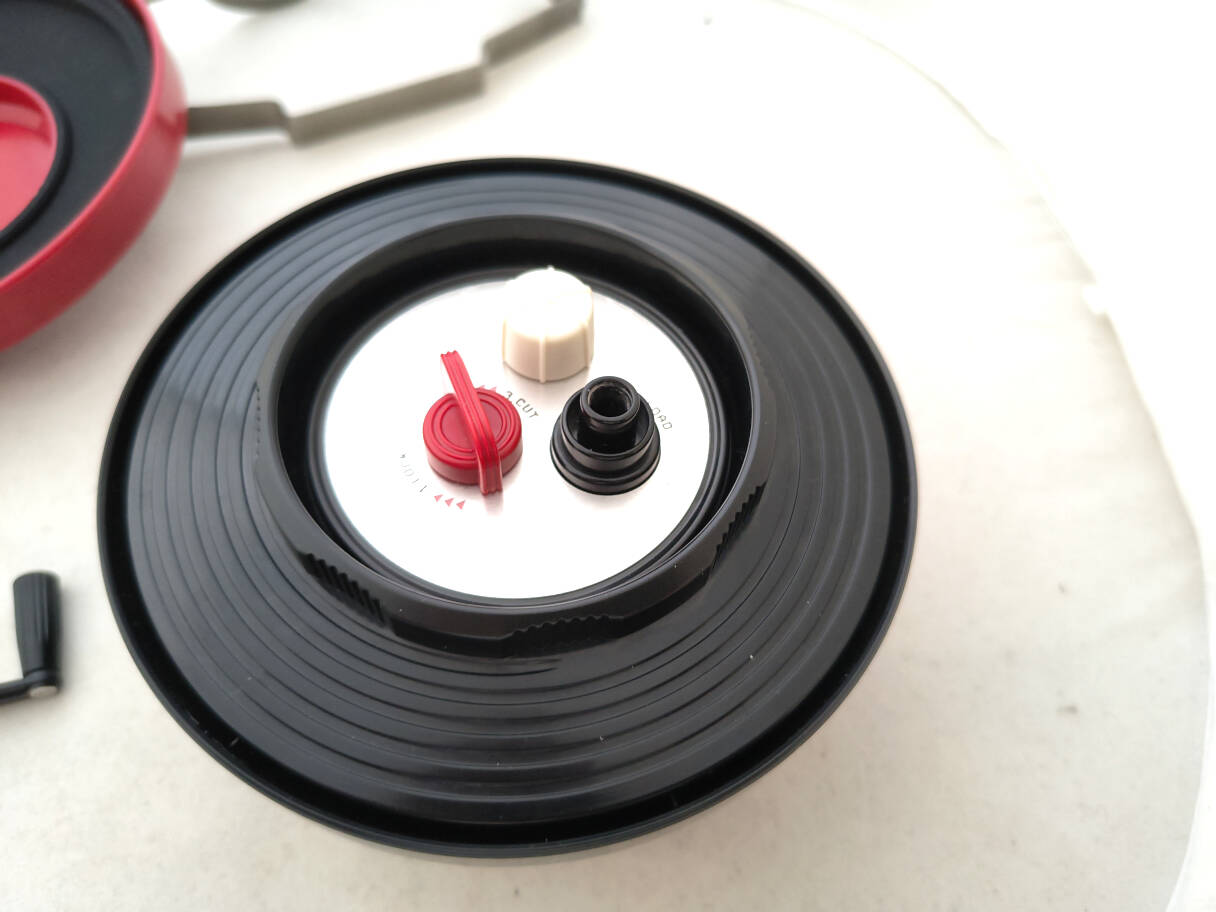
The marks should meet prior to inserting the feeding unit. The cutter knob has to be in unlock position.
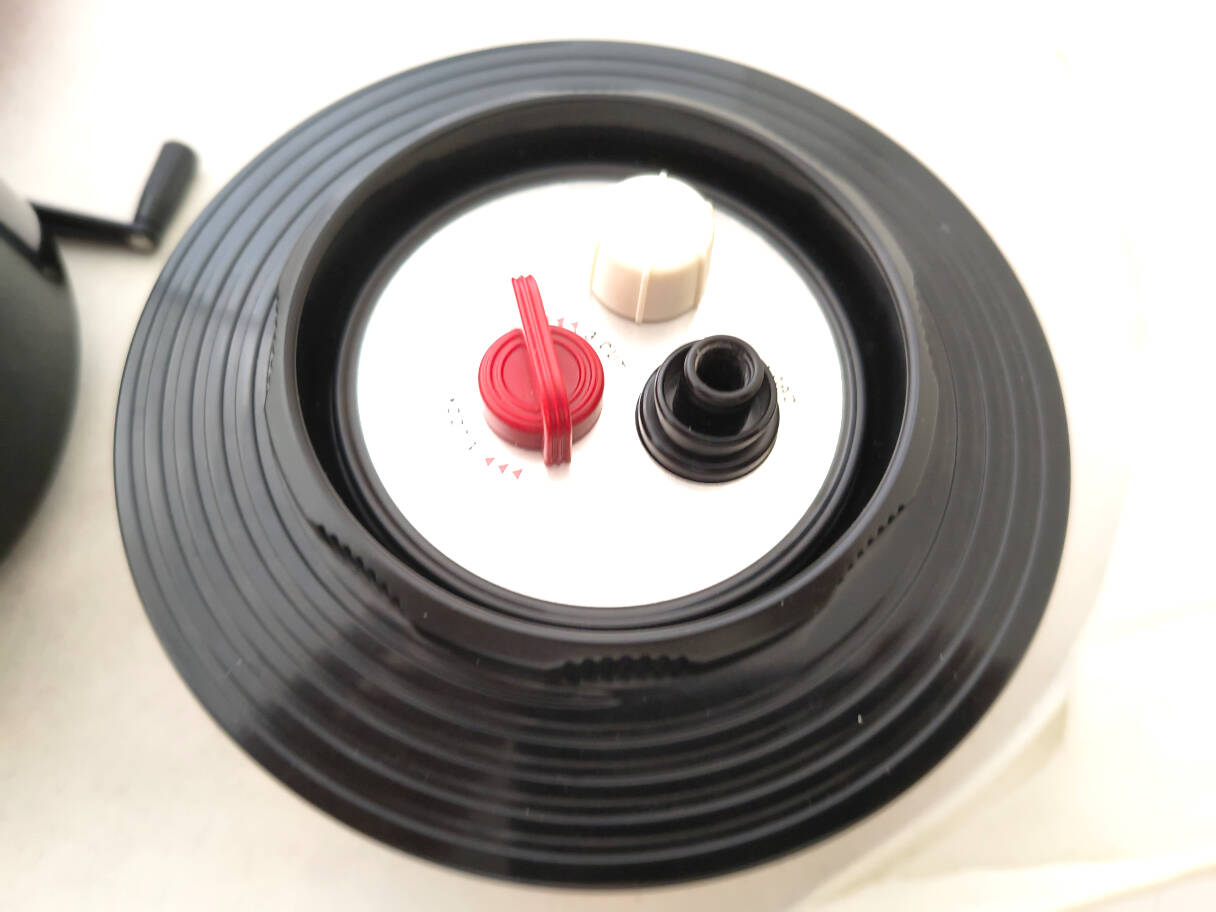
The feeding unit inserted. Move the cutter knob to lock which opens the gate to the deloping spool.
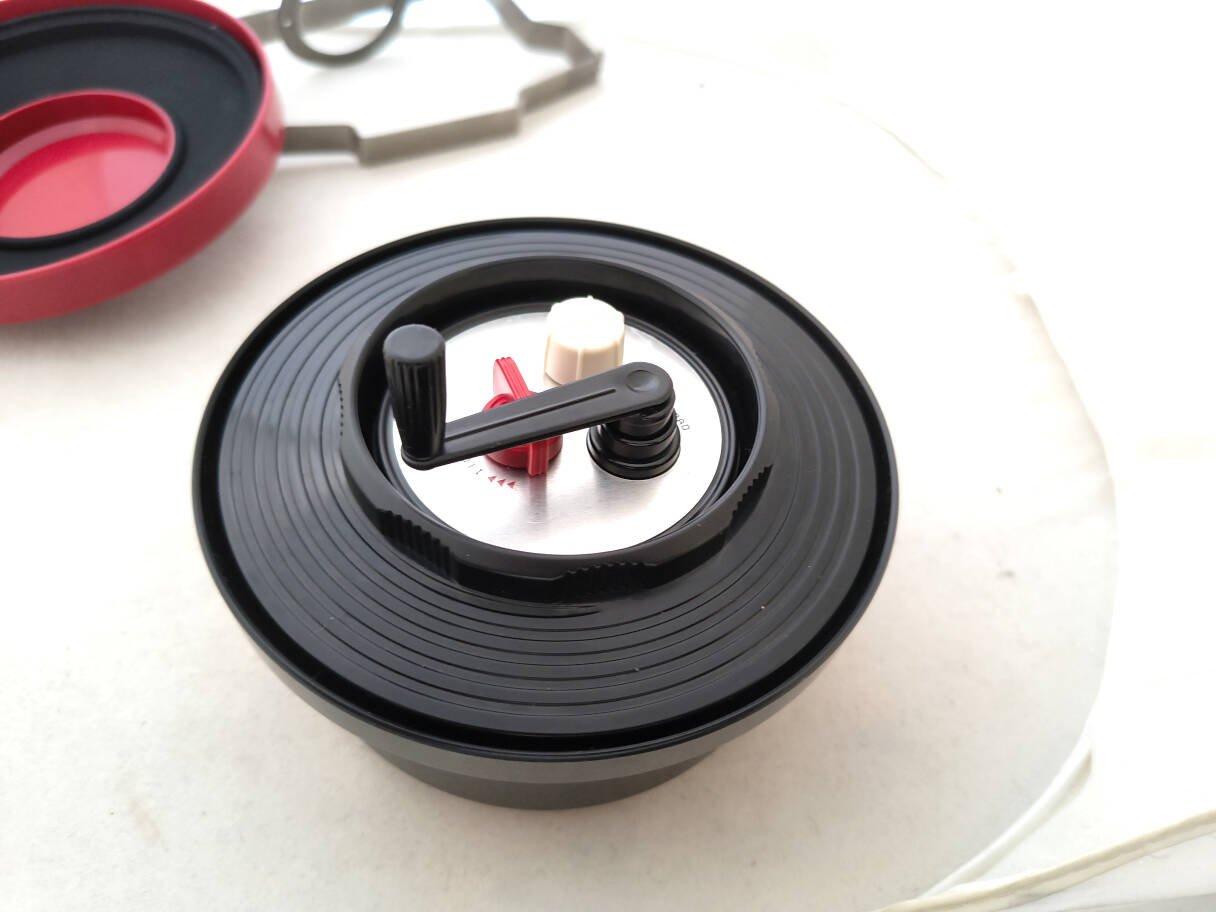
Insert the handle and turn. The film will be fed into the developing
spool. It stops when all film is fed. To be sure that it doesn't stop
because of some jam, make half a turn into the other direction and then
turn again in the right direction. If it stops again, this is really
the end of the film.
Take
out the handle and turn the cutting knob with a vigorous move to "cut".
You should hear a click. The film is cut and the developing spool is
closed again and light-tight. Now you can take out the feeding unit and
start to develop your film according to your preferred method.
It's all in the manual, step by step. Follow the instructions and all will be fine. The tank is a great help for newbies.
Personally I use ordinary Jobo spools in a sleeve, mainly from the 1000
series because they need less chemicals and I often do semi-stand
development. Since I changed to the plastic Jobo spools many many years
ago, I have no problens to spool a 120 or 135 film within less than 2
minutes. The only thing is to be sure that the spool is absolutely dry.
One drop of water and you film will not glide. That's why I have plenty
of spools and let them dry overnight.
Some
gereral words about Lomography and their service: There is a
2-year warranty, at least in Europe. My personal experience with their
service is very good. As most of their gear is made of (cheap)
plastic, there is no repair, they just exchange your defective unit. In
the old days you had to send it in to their Vienna office at your
expenses, which
was
not cheap if you are not based in Austria. 2026 warranty issues were
treated
by a new system: they sent me a prepaid shipping voucher. This is much
better. Anyway: You absolutely need a proof of
purchase, there was heavy abuse by fraudulent customers they told me.
So if you buy second hand or your item is gift, be sure to put your
hands on the proof of purchase. After the 2-years warranty period
it's over. They will try to help for the expensive not-so-plastic
cameras like the LC series, but there is no repair. Keep
this in mind for the prices you pay for older gear.
I had two different issues with the tank. Sometimes the spooling of the
film into the developing spool jammed with about a third of the film
still in the canister. As I thought that all the film was in, I cut and
lost the rest of the film. Then the cutting unit jammed. I lost an
entire film as the feeding unit could not be taken out. Lomography
exchanged the faulty tank without a problem. I was difficult for me
however, as the tank was a present and the person who gave it to me did
not want to give me the invoice.
In the end I have returned to my
old school Jobo tanks...